
What Is The 180 Rule In Comics?
The universe of comics is vast, dynamic, and diverse, and many avid readers are part of it. So, have you ever experienced a moment where you are reading a comic panel, and characters A and B are talking, but the moment you move to the next panel, something feels off?
Everything is quite all right, the dialogue is perfect, the characters are the same, but being a reader, you realise that something does not sit right here. And, exactly here, at the point of confusion, the lack of the 180-degree rule is the actual cause of the confusion.
The 180 rule in comics is actually balancing a stable sense of space across panels so the readers can follow where the storyline is heading without doing any additional effort.
It is literally unnoticeable when everything in the panels is stable, but when done wrong, many readers notice it right away, so here, maintaining stability is quite significant.
What is Spatial Consistency and why is it More Important than You Think?
One thing that makes the comics so much more interesting is that it is a pact between the author and the audience. You guide the eye, and the reader trusts your direction. And it does not take much to break that trust, and even a bit of misalignment will do it very subtly.
When characters swap sides unexpectedly, it results in scenarios where dialogue becomes harder to follow, emotional beats lose impact, and even the fighting scenes seem confusing in a negative way. You, as an author, certainly do not want your comic piece to go to waste just because 180 rule is broken.
The readers simply start disengaging with the storyline you are providing. The rule is to present clarity and not to limit it, but establish it, and this is exactly where spatial consistency becomes the foundation of 180 rule in comics.
What Exactly Is This Invisible Line Everyone Talks About?
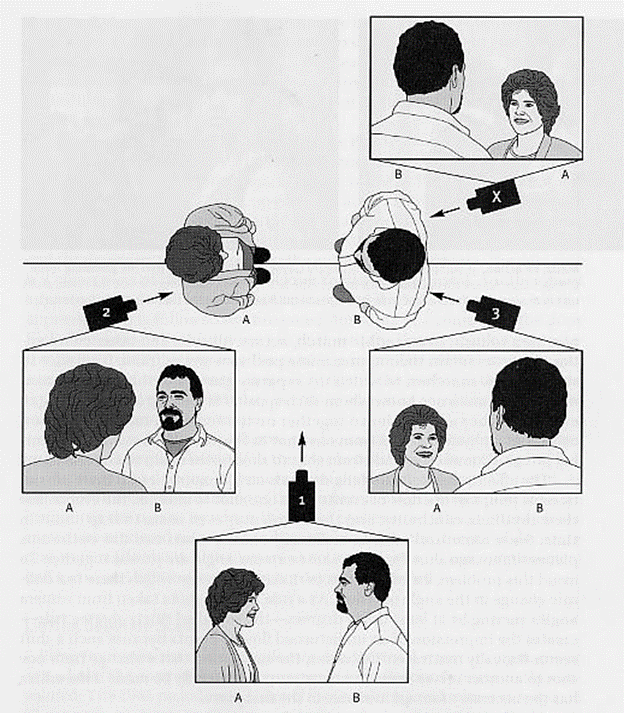
If you are planning to write a comic and are still confused about what is thing invisible line is about, we are here to help you comprehend this phenomenon. Let’s draw a line between two characters, and this line acts like a boundary. If you keep your camera viewpoint behind the line, it all stays the same.
Now, the difference in comics is that you do not move the camera, but you decide what the panel is. So don’t think of it in terms of the film, but imagine as if you are building a mental map in the mind of a reader.
The 180 rule is about making sure that the map does not unexpectedly spin. So if they are on the left in the first panel, they should be on the left in the next, unless you subtly lead the reader through a change.
The children’s comic book publishing in UK always makes sure that this strategy is executed properly before the final publishing and distribution of the physical copies.
Why Do New Authors Often Break the 180 Rule?
Understanding why the 180 rule is not executed in the comics is far more important than learning about it, and you can totally change the game and make things interesting for the reader. Most of the time, this mistake occurred because the authors are more focused on something else, and it shows that it is not something done deliberately.
Are You Drawing Panels Individually Instead of Sequentially?
A major problem is drawing your panels as individual illustrations. When you are worried about getting each drawing right, but overlook the fact that comics are not a string of illustrations, things start going wrong. When panels are drawn independently,
- Character positions drift
- Backgrounds lose consistency
- Orientation flips without intention
The solution is not technological, but conceptual, and you need to think in sequences, not snapshots.
Are You Accidentally Mirroring?
Another subtle mistake is accidental mirroring. You draw a strong composition, then flip it for the reverse shot. It feels balanced, but it quietly breaks spatial continuity. The overall outcome looks good, but it ends up disorienting the reader.
Are You Ignoring Background Anchors?
Another approach that unintentionally becomes the reason for breaking the 180 rule is disregarding the background. Always remember that doors, windows, and furniture are not just there for decoration in the picture, but they actually anchor space.
When these elements shift or disappear between panels, readers lose their sense of orientation, even if the characters remain consistent.
How Do You Use the 180 Rule Without Making Any Mistakes?
The reason behind many comic writers being famous is that they are very much aware of the intricacies of writing one. And among all of the strategies, the 180 rule one is quite complex, but at the same time, it is easy to apply when you know the right technique.
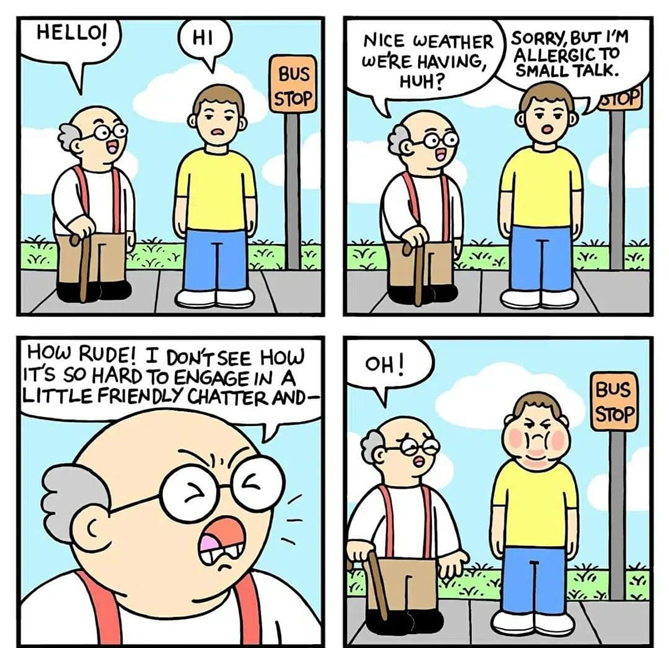
In this picture, you can see that the old man remained in the same position throughout the four panels and the boy also maintain its position.
Now, we are going to explain in more depth how this 180 rule actually works and what you have to do.
Step 1: Show the Location
At the initial stage, you have to use a panel to establish the space. This is best done with a wide shot. Remember, it is a guide panel, and it tells the reader:
- Where characters are
- How do they relate to each other
- Which way are they looking
Once this is known, the subsequent panels can be read with this knowledge.
Step 2: Maintain Directional Flow
Now moving forward, the next step requires a consideration of how you maintain the positioning and movement of the character. If your character is looking to the right in one panel, they should look to the right in the next, unless it makes sense for them not to. This is also done to help with page navigation.
Step 3: Neutral Panels to Change Sides
There comes a time in your storyline of a comic which calls for approaches that are different from the regular strategies. It is completely fine to cross the invisible line. But you need to transition the reader in a very subtle and natural way.
A neutral panel, such as a front-on shot or an establishing shot, is a reset. It indicates that the point of view is changing. Without this, the change feels abrupt and confusing.
When Can You Break the 180 Rule Deliberately?
The point which allows you to go beyond the boundary of the 180 rule makes the whole thing so much more powerful than merely being restrictive. This is where the 180 rule is also a strength. It can remarkably create an emotional impact when done in the right way. Even children’s book publishing services sometimes guide you to do this in a way that looks natural and something completely normal when the readers are exploring it.
Creating Disorientation
If your character is confused, lost, or distressed, you can create this effect by breaking the spatial consistency. The reader experiences the same instability.
Emphasising a Dramatic Shift
A dramatic shift in point of view can indicate,
- A power shift between characters
- A new emotional tone
- A reveal or twist
But the key is clarity, and even when breaking the rule, the reader should feel guided, not abandoned.
FAQs
Should I only follow the 180 rule in action scenes?
Not at all. It may be important for action scenes, but it is also important for subtle dialogue scenes. In fact, in quiet scenes, it is even more important because there is less action to follow.
Can beginners ignore the 180 rule while learning?
It is best to learn it now. Not learning it now can make it a tough habit to break. But you do not have to use it perfectly, and just be mindful of spatial consistency.
Do all comics follow the 180 rule?
No. Many experienced creators break it intentionally. But they do so deliberately and carefully, without confusing the reader.
Is the 180 rule the same for comics and film?
The core idea is similar, but the application differs. In comics, you have individual control of each panel, so you can do more things, but you also have to be clear.
Final Thoughts
You can see people telling you that the 180 rule is a technical guideline, but if we look into its depth, it is a practice that requires precise attention to the details. You have to engage your reader in a way that they explore the storyline, which is stable and connected from the starting page to the very end. By doing so, you can make your piece stand out among the crowd of many others.

Peter Henley is a professional book writer at Childrenspublisher.co.uk. He shares valuable tips and advice through blogs and guides, making the process easier for aspiring authors. His goal is to support and inspire those just starting out in the world of children’s literature.